Monday, October 15, 2007

Medieval church rebuilt


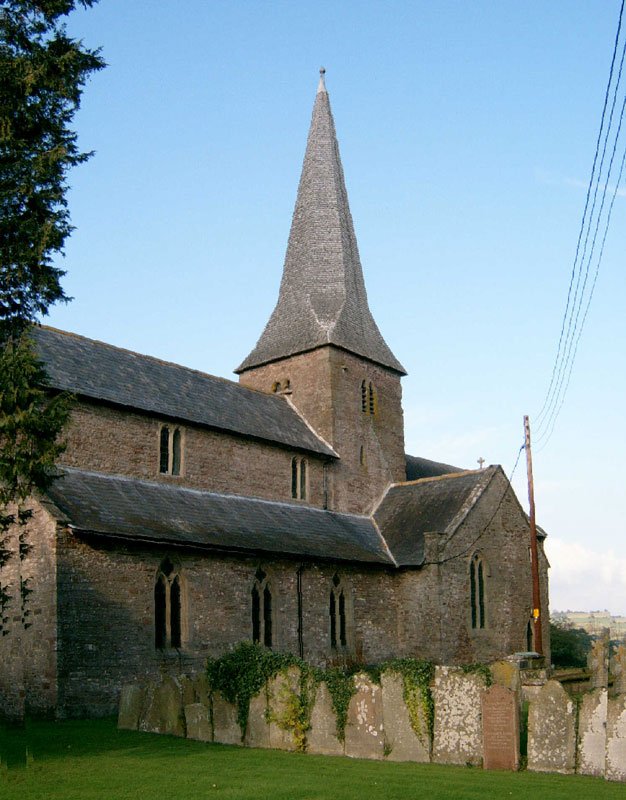
A medieval church which was dismantled and rebuilt stone-by-stone 50 miles away is due to be opened by the Archbishop of Canterbury.


St Teilo's Church has been moved from the West Wales community of Pontarddulais to the St Fagans National History Museum in Cardiff and renovated in a project that has lasted almost a decade.


Carpenters and painters have rebuilt and decorated it to look as it did in the 1520s, using inspiration from a set of rare wall paintings dating from the period which were found when the building was being dismantled.


The painstaking project is thought to be the first of its kind attempted in Europe.
Reverend John Walters, the vicar of the new St Teilo's Church in Pontarddulais which replaced the medieval building, said: "The church will be a revelation to everyone and will offer an insight to part of our country's hidden history."


First Minister Rhodri Morgan is one of those welcoming the church's renovation as his great, great grandparents were one of the last couples to be married there.
He said: "I have watched the incredible skills of the restoration team that have reconstructed the building and saved the frescoes.


"This is a stunning addition to the treasure trove of Welsh history contained in St Fagans."
Original materials have been used where possible, with missing items replicated to be as authentic as they could be. Craftsmen used the same tools and techniques as those used hundreds of years ago in the ambitious process.


Those who remember the church at its original site, where it last stood in 1985, have been invited to a service being held by Rev Walters as part of the opening.


Saturday, October 13, 2007

The Life and Death of a Pumpkin

On October 26th you too can brutalize a pumpkin!

It's the Great Pumpkin Charlemange!


BOO!


Just to let everyone know, the Medieval Studies Corpse Union is holding two very spooky events this October.


1. MSCU Pumpkin Carving - Since many of us live away from home we miss many of holiday rituals. Halloween is one of my favourite holidays. To celebrate the scariest time of year, the MSCU will be holding a second annual Pumpkin Carving Day!


Come along and bring your fiends ... er friend (living or dead) and carve a pumpkin for your favourite professor. We'll provide everything you need to make a fearsome jack-o-lantern - pumpkin, cutting tools, clean-up supplies, candy - you name it we'll have it.


We're holding this event on Friday, October 26th starting at 4:00 pm in the courtyard of Clearihue. Dress warmly - you wouldn't want to catch your death of cold.


2. Corn Maze of HORROR!!! - On Halloween Night (October 31st.) we're organizing a trip to Galey's Corn Maze of HORROR!!! I do not yet know the prices, but the moment I know I'll post the information.


Are you brave enough to endure such terror as a haunted corn maze? I'm sure we'll have a devil of a time.


Ryan Haunt

Medieval Studies Corpse Union !


Mmmwwwhhhaaaahhh!!!!


MSCU Recommendation: "Cursing the Basil"


In this new feature, members of the MSCU will give their recommendations for 'things' (as Dr Kwakkel would say, 'kept deliberately vague') which they believe are worth looking into. If you have any glowing recommendations, please let us know.


Ryan's Pick: Cursing the Basil by Vivian A. Rich

Several years ago my grandparents were moving and selling many of their surplus books. Since family got first (and more importantly free) choice, I dove in with gusto. You see, I'm a strong believer that free things are the sweetest things.

One book which caught my eye was Vivian A. Rich's Cursing the Basil. I flipped through a few pages and looked at the index. Much to my glee there was a chapter on death curses. I was more than happy to take home a book which taught me how to smite my enemies, especially at the low, low price of zero dollars - I took it home.

My frugality and sadism (once again) served me well - this is a wonderful and informative book.

Cursing the Basil examines the use of plants throughout the ages. Her topics range from Roman flower markets to the special treatment of mandrake root to the Byzantine significance of Victorian flower arranging.

Author Vivian A. Rich earned her Ph.D. from the University of London, England. Currently living in Victoria, B.C. Canada she has been known to give lectures at the University of Victoria about the history and lore of flowers and herbs. She is also the author of The Medieval Garden and contributed to the Macmillan Dictionary of Art. Rich, therefore, has a firm grasp on the material at hand.

The author strikes a good balance between erudition and readability. The book, while informative, is easy to pick up and read. The use of plants and the attitudes which surrounded them had never been a subject I considered until I read this book. It provides an account of social history - a field which I too often neglect.

I won't go into too many details because this book is worth reading for one's self. Even though I got this book for free, I would happily pay for it. Although be warned - the death curses don't actually work (not that I tried them...).

Manuscript discovery brings medieval music to life


Medieval history comes to life at Harvard University on Oct. 18, when students and guest musicians collaborate in the North American premiere of an 800-year-old chant repertory from Harvard’s Houghton Library.


One of the chants that will be performed was recently discovered by Thomas Kelly, Morton B. Knafel Professor of Music at Harvard, in a collection bequeathed by Philip Hofer, founding curator of the Houghton Library Department of Printing and Graphic Arts.


“I was looking through several stacks of manuscripts to explore which would be good subjects of study for a graduate seminar, when I opened one and said, ‘Wait a minute…’” Kelly explains.


It’s a good thing he did. The manuscript turned out to be a book of Ambrosian chant, dating from the 14th century. Kelly estimates that there are only 100 complete manuscripts of Ambrosian music still in existence.


Ambrosian music is a style of liturgical chant that was practiced in Milan for centuries. The chant is named for St. Ambrose, the bishop of Milan. Although Gregorian chant is more familiar today, Ambrosian chant remained an important part of the medieval cultural scene well into the 15th century.


“We misrepresent medieval chant if we say it was all Gregorian,” Kelly says. “Ambrosian chant survived the spread of Gregorian chant, so it has a larger significance in understanding how music spread throughout the medieval world.”


According to Kelly, Ambrosian chant survived because of strong local authority and tradition.


“No one in Milan could be convinced that the authority of Pope Gregory was greater than the authority of St. Ambrose,” Kelly says. “But the myth of Gregory the Great enabled Gregorian chant to spread widely elsewhere.”


Thrilled by his discovery of the manuscript, Kelly encouraged Houghton Library to acquire two additional, older manuscripts of Ambrosian chant. With the help of William Stoneman, Florence Fearrington Librarian of Houghton Library, Harvard was able to acquire, preserve, and digitize what has become a significant collection of Ambrosiana. The collection now spans the 12th to the 15th centuries, which will allow Kelly and others to study the development of the repertory over time.


“We are excited that the acquisition of these manuscripts will provide deeper understanding of the topic and encourage scholarly discourse,” says Stoneman. “Our goal is to acquire material which supports the teaching and research of the Harvard community.”


For Kelly, the most exciting part of the manuscript discovery is the opportunity it provides for live performance and music-making.


“It is incredible to sing from an 800-year-old object,” he says. “These manuscripts come to life only when you sing from them. Through performance you can create a connection with a human being who, centuries ago, held this same text in his hand.”


Ambrosian chant will once again ring out on Oct. 18 when Kelly and the maestro di cappella of the Basilica of St. Ambrose in Milan lead vespers services at St. Paul Catholic Church in Cambridge. Performers from the Basilica of St. Ambrose and music students from Harvard University will sing from the Harvard manuscripts in what is likely their first American performance.


“Ambrosian music is still sung in two places in Milan,” Kelly says, “but we don’t know that it is used anywhere else in the world.”


The vespers will include all the ceremonial rites of a traditional Ambrosian service.


“All are equally welcome, whether they think of it in religious or academic terms,” Kelly says.


The service kicks off a weekend conference focused on the Ambrosian manuscripts, titled “Ambrosiana at Harvard: New Sources of Milanese Chant.”


“We are especially pleased that these acquisitions have created this occasion,” says Stoneman.


The conference is funded by Houghton Library through a gift in honor of Zeph Stewart, Andrew M. Mellon Professor of the Humanities, Emeritus; the Committee for the Provostial Fund in the Arts and Humanities; the Harvard Divinity School; the Committee on Medieval Studies at Harvard; the Harvard Department of Music; and the Barker Center for the Humanities.


The three Houghton manuscripts, an additional manuscript from a private collection, and photographs of other Ambrosian material are currently on display at Houghton Library.


By Emily T. SimonFAS Communications


Priory yields medieval security secrets


They lay hidden from view for hundreds of years, guarding silently the secrets of a tumultuous history.

But when archaeologists working on a £900,000 conservation project at Binham Priory, in north Norfolk, uncovered two medieval windows dating back to the 13th century, they knew the discovery would provide a rare glimpse into the site's past.

Historians are now working to find out whether or not the two windows at the site's gatehouse were part of a room possibly inhabited by a monk who would have kept a watchful eye on all people, animals and carts entering or leaving the monastery.

The two dressed stone windows had been blocked out when previous owners built a reinforced concrete pen to house a bull on the existing mediaeval building, bricking in the ancient walls. With conservation work currently underway, archaeologists decided to demolish the shed and strip the wall bare to reveal the mediaeval structure that had been hiding underneath for centuries.

“The discovery comes as a surprise,” said Peter Wade-Martins, director of the Norfolk Archaeological Trust. “We were astonished to find these two windows which will now help us to get a better idea of what the gatehouse and indeed what the entire site would have looked like in medieval times.”

The site, which witnessed moments of upheaval from the earliest days of the Norman Conquest through to the dissolution of monasteries at the Reformation, continues to surprise not just historians but also botanists who have recently stumbled across one of Norfolk's rarest plants.

“The wall bedstraw is a very frail flower which grows in chalky soil only,” said Pauline Scott, of the Binham Priory Trust.“

We have recently been told by botanists that 70pc of north Norfolk's wall bedstraw grows here at Binham Priory. As the conservation work includes the restoration of the old precinct wall we are taking great care not to disturb this frail plant and to protect it as much as we can.”

The conservation work is being undertaken as part of an £886,000 project aimed at making the historic priory more accessible to the public, of which £648,500 has been financed by the Heritage Lottery Fund. The discoveries follow a remarkable fund-raising campaign led by a project team of four and supporters in a village of only 250 residents, which has led to the project securing all of the remaining funds with just a £53,000 shortfall to be found over the coming year.

Planned improvements to the site are: paths to enable disabled access; a new porch in the north aisle to act as a secondary entrance to the church, which is still fully operational for services; the addition of visitor toilets; display space for archaeological finds from the site and a refreshment point. The project, which is due to be completed by September next year, will also see additional information panels. The site is enjoyed by more than 12,000 visitors a year.

Anyone willing to help can contact David Frost from Binham Priory Trust on 01328 830362 or email davidfrost226@btinternet.com

From: Fakenham & Wells Times

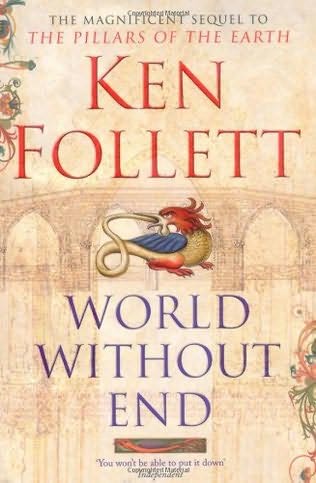
'World Without End' by Ken Follett


By Stephen O'Shea, Special to The Times


Descendants of the author's Kingsbridge folk in "The Pillars of the Earth" contend with 14th century calamities.


At more than 1,000 pages, Ken Follett's "World Without End" comes perilously close to fulfilling the promise of its title. The second of the thriller writer's medieval novels, this new supersized story inspires the same question posed by its doorstop predecessor: Too fat to pick up, or too engrossing to put down? Naturally the author plumps for the latter: Sure of interest in the project, he invited a crew to film him writing the monster, and the program aired in his native Britain last month.


All this excess will delight the Follett faithful, accustomed to his whipsaw plotting and repeated recourse to violence and rapine. Like his previous medieval effort, "The Pillars of the Earth" (his most popular book to date), "World Without End" makes for giddy chutes-and-ladders reading; no situation can be reversed too often, no conflict resolved without serial surprises. Follett's Middle Ages -- bestial, political, venal -- are relentlessly eventful.


The setting is Kingsbridge, a stout market town in the heart of England whose 12th century cathedral builders were put through the Follett wringer in "Pillars." Now comes the turn of their descendants, as the novel follows four principals through the first half of the calamitous 14th century. Two spirited women -- one a stubborn and lovesick serf, the other a preternaturally intelligent merchant's daughter -- lead tempestuous lives intertwined with those of two sons of a ruined nobleman. One boy becomes a master architect; the other, rotten to the core, rises in the ranks of the aristocracy through the application of strategic atrocity. As children, these four witnessed a murder on which the kingdom's fate hinged; as adults, they struggle for power and position amid the interest groups in the town: monastery, nunnery and merchants' guild.


While the story zigzags mostly around this foursome and their weddings and beddings, along the way Follett has his many characters work out the mechanics of medieval bridge building, wool dyeing, market trading, medicinal bleeding and tax levying. These nuts-and-bolts dialogues are edifying, even if at times the enterprising townspeople sound, alas, like the guileless problem solvers of "The Magic School Bus." Where Follett excels, however, is in the dramatization of the politics of clergymen versus burghers versus nobles -- the constant tug of war that made medieval life as contentious as our age of litigation. Monastic politics, for example, usually come coated with dust in academic histories; here, thanks to Follett's breezy, anachronistic style, the obscure infighting is fresh and diverting. Thus we are treated to the memorable prior of the monastery in Kingsbridge, incompetent at everything save acquiring and maintaining power, and his Karl Rove-like sidekick, adept at playing dirty tricks and sliming reputations. Like the current White House, the two move from one catastrophic decision to the next, all the while maintaining the upper hand.


So, what actually happens? In the first half, the central stake is the governance of Kingsbridge and its revenue-generating fleece fair. The bright merchant's daughter, Caris, and her paramour architect, Merthin, struggle to free the town from monastic control and its hidebound devotion to tradition. Follett shows how effervescent the medieval era was, with trade expanding and new ideas cautiously being floated. The lovers' ambitions are thwarted when Caris, accused of heresy, is forced into a convent, upon which the heartbroken Merthin decamps to seek his fortune in Florence. Unbowed, Caris journeys to France with a beautiful lesbian nun and accidentally witnesses the Battle of Crécy, the kickoff to the Hundred Years' War. Mayhem connoisseurs will rejoice at this reconstruction.


Into the narrative roars the Black Death, reshuffling, or rather halving, the deck and allowing the survivors a chance to hatch new schemes and couple with new partners. It will come as no shock to his readers that Follett, whose flair for nonconsensual-sex scenes borders on the distressing, lingers on the hideous symptoms and agonies of plague victims. In a more seemly vein, he demonstrates how the epidemic changed the lives of peasants, who suddenly had bargaining power as a result of the labor shortage. In the wake of the plague, the perpetually luckless serf Gwenda finally manages to outmaneuver her rapist overlord, who is none other than Merthin's ne'er-do-well brother, Ralph.


In the dizzying spiral of the book's latter half, Caris more or less invents modern medicine in her convent plague hospital in Kingsbridge. Merthin, now a rich widower, returns to town. Ralph, a hero of Crécy and thus in royal favor, extorts, bludgeons and abuses with abandon.Couples are made and unmade, ghastly comeuppances dished out and a swarm of subplots finally put to sleep, until at last a gay bishop and his lover (both French, of course) come to see the innate reasonableness of the townspeople, who are led by Merthin and Caris, united by love and brains.


Stretch plausibility as it may, "World Without End" remains a breathless entertainment, and one with few pretensions to faithfully re-creating the Middle Ages. (That feat was perhaps best achieved in Zoé Oldenbourg's 1946 classic, "The World Is Not Enough.")Serious medievalists may sniff and literary novelists howl, but legions of readers will go along for the ride -- needing nothing more than a strong pair of wrists to lift the darn thing and, if I may make a suggestion, a very big bowl of popcorn.

From: LA TIMES

Wednesday, October 10, 2007

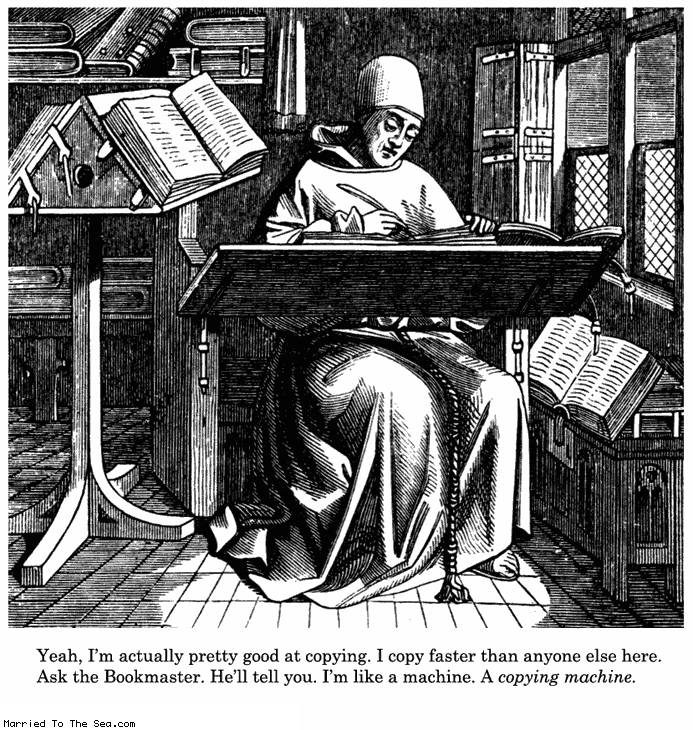
Medieval Copiers


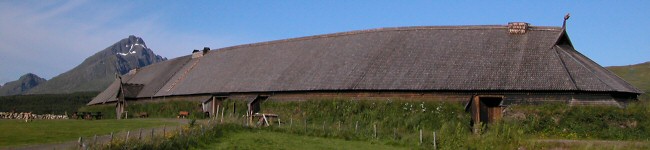
Viking longhouse project is right on track


By FERGUS McEWAN
Reporter


MANY hands are making light work of an ambitious £78,000 living history project at the Ard Whallan outdoor education centre.

After months of fundraising, work began in April to build an authentic Viking longhouse on the slopes overlooking West Baldwin, designed to give a taste of life in the Island 1,000 years ago.


It will eventually form part of a Viking homestead where school parties will be able to make clothes and furniture, as well as cook, weave and tend to hens and sheep.


The Department of Education-led project required a lot of tough physical labour to build solid dry-stone walls and sturdy wicker fences by hand, but staff from Scottish Provident International Life Assurance (SPILA) were happy to help.


In the last five months, most of the firm's 130 Island-based staff have swapped their office for a wind-swept hillside to bond as a team and get involved in what they called a 'worthy community scheme'.


Under the supervision of an expert, these hardy volunteers have put up fences marking a path up the hill to the site of the longhouse, where the walls are still under a metre tall but rising every day.


Visitors will pass through rows of saplings planted by school children, expected to grow within 15 years into an ancient woodland of trees indigenous to the Island in Viking times.


Once the walls of the longhouse are two metres tall, these same trees — including oak, beech, willow and Scot's pine — will be used along with Manx timber to create a roof frame and thatch roofing.


Those species which no longer grow around West Baldwin or even in the Island will be provided by the Department of Agriculture, Fisheries and Forestry.


Ard Whallan education officer Paul Young said support from the government and volunteers had allowed the project to maintain its ethos of using authentic materials and building methods.


Although completion was still some way off, Mr Young said young people and adults visiting the centre would benefit from a rare opportunity to experience first-hand the life of ancient Island dwellers.


A spokesman for SPILA said: 'As part of its corporate social responsibility, SPILA feels it is very important to assist in educational programmes such as this.


'Many employees have thoroughly enjoyed the experience of getting involved and have even learnt a few skills along the way.


'Lillian Boyle, managing director of SPILA, said the project was an 'opportunity to put something back into the community' which would 'aid youngsters in learning about living life in Viking times'.


From: IOM TODAY

Tuesday, October 9, 2007

Word of the Week


This week's word: vade mecum


The phrase means "goes with me" in Latin and refers to a portable book (often suspended from a belt), frequently consisting of leaves folded in a concertina or fold-out format. Such books could be consulted easily by physicians, for example, and often contain calendars, almanacs, and medical information.


Michelle P. Brown, Illuminated Manuscripts - A Guide to Technical Terms, 1994.

Vid game is next chapter in fairy tale


Worldwide Biggies is bringing the 1987 film "The Princess Bride" to video games in an exclusive deal with Act III Licensing.


Worldwide Biggies CEO Albie Hecht said a teaser version of the game will be on the upcoming "The Princess Bride 20th Anniversary DVD," with the full game, "True Love and High Adventure -- The Official Princess Bride Game," set for release as an online download in the spring.


Hecht added there are no plans for retail distribution, but he said the game has a strong chance to tap into the burgeoning casual gaming audience. And that includes women, many of whom grew up as fans of the Rob Reiner movie that starred Cary Elwes, Robin Wright Penn and Wallace Shawn.


Numfar- do the dance of joy!

Hey, it's Medieval-ish, right?

Car park dig for medieval castle


Volunteers are helping archaeologists search for signs of a medieval castle thought to be under a village car park.

Researchers believe the castle once stood at the site in Maenclochog at the foot of Pembrokeshire's Preseli Hills.

Villagers are working with professional archaeologists for two weeks in a bid to find out more about the land.

A topographical survey of the site last year suggested the site was probably that of the castle and possibly an earlier Iron Age fortification.

Documentary evidence suggests there was a castle at Maenclochog dating back to the 13th Century.

The dig, involving part of the village carpark, has been organised by local enterprise organisation Planed, with the help of Cambria Archaeology and Pembrokeshire National Park.
Planed's Christian Donovan said research was commissioned last year to come up with possible locations.

Actively involved

"They had always thought there was a castle in Maenclochog and people living there wanted to find out more about it," she said.

Around 20 amateurs will take part in the dig which started on Wednesday and at the end of each day villagers will be invited to tour the site for an update on what - if anything - has been found.

"We also have local school children coming to have a look next week," added Ms Donovan.

A similar project last year saw volunteers uncover human remains as they searched for a pre-Norman cemetery at Angle Bay in Pembrokeshire.

"They found a body last year - we don't think that will happen this year," added Mrs Donovan
She said the aim of the projects was to interest people in the history of their communities and get them actively involved in researching their heritage.


From: BBC NEWS

Castle unveils medieval tapestry


A tapestry that recreates part of a priceless Renaissance work of art has been unveiled at Stirling Castle.

The intricate 12ft by 14ft tapestry, entitled The Unicorn is Killed and Brought to the Castle, has taken a team of weavers four years to complete.

It forms the third part of the famous 16th century Hunt of the Unicorn series of tapestries, being recreated at the castle at a cost of £2m.

The original tapestries are housed in a museum in New York.

Work to recreate the set of seven tapestries is due to finish in 2013.

Historic Scotland unveiled the third work to the public at a special reception within the castle, where it is to hang in the centuries-old Chapel Royal.

'Love story'

The original tapestries, woven between 1495 and 1505, once adorned the walls of the castle, which was once the seat of the Stewart Kings.

They are believed to have been bought by King James V and appear in every Scottish royal inventory from 1539 to 1578.

John Graham, chief executive of Historic Scotland, said: "This is a very special contribution to the restoration of one of Scotland's finest castles.

"It is also helping to keep important traditional skills alive. "


Watching the weavers at work on the wonderful colourful tapestries has now become established as one of Stirling Castle's key attractions."


It is not known exactly who the original tapestries were first made for, although the initials A and E, the E written backwards, are woven into all seven originals.

They are also said to contain "hidden meanings" which can be interpreted as both a religious story and as a medieval love story.

They are now housed in the Cloisters Gallery of New York's Metropolitan Museum of Art and are considered among the finest examples in the world.

Stirling historian Craig Mair said the tapestries were an integral part of medieval and renaissance interior decoration in the chambers, state-rooms and great hall at the seat of the Stewart monarchs.

He said: "Tapestries provided decoration and a lavish display of wealth as well as keeping out the cold and damp. "


They also contained many vibrant colours and gold threads which would shimmer in the candlelight, to give at least an illusion of much needed warmth in the cold stone rooms."


From: BBC NEWS

Getty Center Exhibitions Explores Decorated Letters


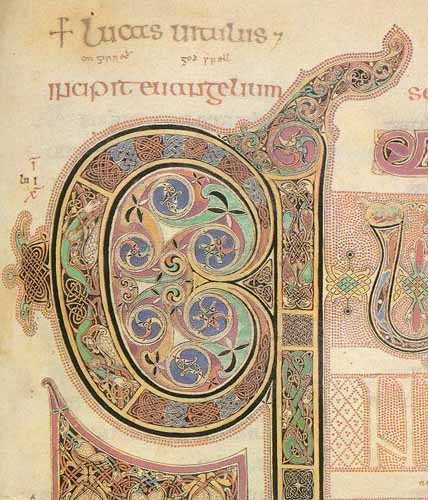
The Decorated Letter, at the J. Paul Getty Museum, the Getty Center, November 13, 2007-January 27, 2008, explores the stylistic traditions of decorated initials preserved from a period that spans over 700 hundred years. Exhibition materials are primarily drawn from books of scripture and prayer, with a few examples from the realms of law and history, and provide insight into the trends that shaped medieval artistic production.

The exhibition complements the Getty's Fall Premiere Presentation Medieval Treasures from the Cleveland Museum of Art.

Throughout the Middle Ages, handwritten manuscripts were elaborately decorated with initials that called attention to the important part of a text, testified to the authority of the written word of God, and brought the vibrancy of speech and song to the manuscript page. Medieval initials were often intricately designed, lavished with gold, and painted with expensive pigments.
This display of 25 manuscripts and leaves from the Getty Museum's collection presents some of the most beautifully decorated initials in manuscripts, tracing the sophisticated relationship between pictures and words in three major categories of decorated letters: ornamented, inhabited or figurative, and historiated.

Ornamented letters were among the earliest decorated letters applied by medieval manuscript artists. They are usually adorned with foliage or vegetal motifs that range from carefully interlaced, stylized forms to more naturalistic renderings of lush vegetation. In the context of Christian religious service and prayer books, luxurious foliage and vegetal patterns expressed the medieval belief in the life-giving power of the word of God.

People, animals, and fantastic beasts appear in two types of initials that engaged the reader's attention and provoked curiosity about the text the letters introduced. In inhabited letters, figures climb on, crawl through, or emerge from decorative forms. In figurative letters, the contoured bodies of people or creatures form the shape of the letter itself.

Historiated letters contain distinct scenes or subject matter specifically related to the texts they introduce. The earliest historiated letters were simple illustrations of the biblical or historical figure to which a text was attributed. Later examples depicted elements of an important story or scene from the text.

This exhibition also includes an example of a Renaissance constructed alphabet by Joris Hoefnagel, arguably the last great manuscript illuminator. In stark contrast to the animated initials in medieval books, Hoefnagel's Model Book of Calligraphy provides a geometric template and a completed character for each letter of the alphabet.

The Decorated Letter is curated by Richard Leson, a former intern in the Department of Manuscripts at the J. Paul Getty Museum. -- http://www.getty.edu/


Saturday, October 6, 2007

Non movete! Tempore Hammorem est!


MSCU Skating with the profs!


As previously announced, there will soon be a MSCU Skating with the Profs Night. This event will occur on Saturday, October 20th between 7:15 and 8:45 pm at Oak Bay Rec. Centre (1975 Bee Street).

Now there is one caveat. Since professors will be taking time out of their busy schedules to join us, we want to make sure that we have sizable group of students. If you would like to go, please email us back . If by Thursday (Oct. 11th) we do not have 5-10 people signed up, we will be forced to cancel the event.

Admission for skating is $4.10 for students plus a small skate rental fee (less than $3.00). Rides can be arranged for anyone interested - just let us know in advance. People of all ability are welcome. I can barely skate, yet I enjoy myself every time.

We've had this event several times in the past and it's always great fun. Where else can you see your prof fall flat on his/her face? So if this sounds like fun, let us know you're coming. If you want a specific prof to come, let us know and we'll put extra pressure on them to come.

We hope to hear from you,
Ryan Hunt

MSCU President

MSCU Events for October


There are a number MSCU events this October. They are as follows:

1. A General Meeting - Come and voice your opinions on the MSCU's direction this fall and meet the MSCU executive. All people welcomed and encouraged. The meeting will be held on Wednesday, October 10th 2007 in Clearihue A204 starting at 6:30 pm. If you can't make it at that time, feel free to come late.

2. In addition to the General Meeting there will be the first MSCU Movie Night of the year once the meeting concludes. The Movie will be shown after the General Meeting (Wednesday, October 10 th 2007 in Clearihue A204 starting at 6:30 pm). We have several of these movie nights each year. We show movies which relate to the Middle Ages. More often than not, these movies are horrible and we end of laughing our collective bottoms off. As always drinks and snacks will be provided. Please bring friends, family and those of non-specific romantic attachment.

We will leave the choice of movie up to you, the audience. Your choices will include: A Knight's Tale, Camelot, The Seventh Seal, and Aladdin - choose wisely...

3. In keeping with the upcoming holiday spirit (Halloween), the MSCU will be holding the second annual Medieval Pumpkin Carving Extravaganza! Here's your chance to carve a pumpkin for your favourite Medieval Studies Department professor or faculty member. It's a great way to get into the Halloween spirit and to show your appreciation for the hard work of the faculty and staff in the department. As we get closer to the day, the date and time will be finalized. If you are interested let us know so that we may reserve you a pumpkin.

4. A Medieval Script Workshop will be offered later this month. Ever wonder what it was like to be a scribe? Now you have a chance to learn. The MSCU will provide all the materials to make your own faux-folio ( i.e. quill, ink, parchment, gold leaf, script hand-book). The date and time for this have yet to be finalized, stay tuned for more information.

5. Skating with the Profs. Several times each year the MSCU goes skating with Medieval Studies Professors. It's a great way for students to get to know professors. In the past we've had Dr Kwakkel, Dr Millwright, and Dr Baboula come skating. If you're interested, let us know. More information will be provided shortly.

Russia to return medieval stained glass windows to Germany


MOSCOW, October 5 (RIA Novosti) - Russia will return to Germany the last six of 117 stained glass window panels taken by the Red Army in 1945 from the church of Marienkirche in Frankfurt an der Oder.

The decision to return the windows, currently being held in the Pushkin Museum of Fine Arts, was made on Thursday in a Cabinet session, the Russian government's press service said on Friday.

In 2002, Russia returned to Germany 111 of the 117 stained glass windows, which had been kept in the Hermitage museum in St. Petersburg, under a program on the exchange of looted art.

After the draft federal law specifying the procedure of exchange is approved by the State Duma, the remaining medieval-era windows will be returned to the church in eastern Germany.

Russia has claimed a number of German works of art as compensation for the damage the Soviet Union suffered in World War II, when Nazis blew up Russian churches and residences. One of the most famous objects lost in the war was the legendary Amber Room, made in Prussia in early 18th century, and believed to have been looted by Nazi troops in 1945 in Kaliningrad.


Friday, October 5, 2007

We have found a witch. May we burn her?

Monty Python legend theorizes Richard II victim of medieval spin


An English king who has been portrayed as a tyrant for 600 years was likely the victim of political spin, an international conference on medievalism was told in London yesterday.

Terry Jones, better known as a member of the Monty Python comedy troupe, showed his scholarly side as the provocative opening speaker for the weekend conference at the University of Western Ontario.

There were certainly laughs during his presentation in Conron Hall, such as when he described Niccolo Machiavelli as "a very naughty boy" or payments for pardons as "a very good bargain."
But when Jones had finished his 90-minute address on Richard II, he had made a case that the king's aborted reign was "a brave experiment in monarchial rule" usurped by the real tyrant,

Henry IV, his successor.

Jones said Richard made peace with France, a good thing for his people, but his reign was plagued by high-ranking plotters who killed 30 of his supporters and proved to be traitors.
Henry used brute force and censorship to establish his power and scared scribes of the day into revising history, said Jones.

It was largely they who gave Richard the bad rap that still dogs him, he said.
To give weight to his thesis, Jones showed slides of paintings and writings altered during Henry's rule and how writers of the day had changed their tunes about both Richard and Henry.
The legend of comedy received hearty applause at the end of his speech and praise from conference organizer, UWO professor Jane Toswell.

"With an opening address, one hopes for a provocative, well-researched, interesting and exciting speech, and we've certainly had that," said Toswell.

She encouraged Jones to write a book about his findings on Richard.

With such books as Chaucer's Knight and Who Murdered Chaucer? to his credit, Jones has already established himself as a credible historian, said Toswell.

In an interview, Jones said he has always enjoyed writing more than anything -- whether it has been writing comedy skits, movie screenplays, children's books or such contemporary works as his War on Terror.

In the early days of Monty Python, his writing and performing collaborators believed "we could be funnier than anything else that was on television."

But never did they think their comedy would endure to become classics, he said.

"We were just being as silly as we could be at the time," he said.

Jones said he remains good friends with his old Python pals -- John Cleese, Eric Idle, Michael Palin, Graham Chapman and Terry Gilliam.

"It was a short period during our lives. We had a lot fun. But we never had a breakup like the Beatles."

Monty Python's Flying Circus was a series of 45 television shows that aired over four seasons in Britain between the late 1960s and early 1970s. Skits such as Dead Parrott, Spam and Nudge

Nudge became comedy classics.

After TV, the Pythons turned their talents to movies, making the last one in 1983.
Monty Python and the Holy Grail was screened for the medievalists at Conron Hall last night.


Thursday, October 4, 2007

Vatican Secret Archives to unveil rare book on Knights Templar


On October 25 in the Vatican's Old Synod Hall, the presentation will take place of the "Processus contra Templarios," a book published by the Vatican Secret Archives on the subject of the Knights Templar, the medieval military-religious order founded in Jerusalem in 1118 and suppressed by Pope Clement V (1305-1314).


According to a communique made public yesterday afternoon, the new volume is "a previously unpublished and exclusive edition of the complete acts of the original hearing against the Knights Templar." The book, unique of its kind, will have a print run "rigorously limited to 799 copies" and contains the "faithful reproduction of the original parchments conserved in the Vatican Secret Archives."


The project, the communique concludes, "is part of the series of 'Exemplaria Praetiosa,' ... the most elaborate and important publication yet undertaken by the Pontifical Archives."


The new volume will be presented by Archbishop Raffaele Farina S.D.B., archivist and librarian of Holy Roman Church; Bishop Sergio Pagano, prefect of the Vatican Secret Archives, and experts such as the historian Franco Cardini and the archaeologist and author Valerio Massimo Manfredi."


Il Poverello


Today is the feast day of perhaps the most popular Saint in history, Francis of Assisi.

Living in Italy from 26 Sept. 1181 to 3 Oct. 1226, he was a crucial figure in the mendicant movement, founding the order of Friars Minor (O.F.M., the little brothers). His life was pretty eventful: from receiving orders from God to rebuild the Church in San Damiano, to tossing off his clothes in the middle of the town square in obedience to the bishop's commands to return everything of his father's, to embracing lepers, to jumping into a rose bush at the sight of a beautiful woman, to trying to make peace with Sultan Melek-el-Kamel.

Although Francis was not in favour of his order becoming a teaching order like the Dominicans, one obvious problem being the ownership of books as a contradiction of his rule of absolute poverty, the Franciscans made their mark in Medieval education and had a large role in the development of universities, of which Paris and Oxford come to mind most readily. Famous Medieval Franciscan intellectuals include St Bonaventure, Bl. John Duns Scotus, Alexander of Hales, and Roger Bacon.

Here is a well-known poem Francis wrote in Italian, which in English is known as "Lord, make me an instrument of your peace":

Preghiera Semplice

O Signore, fa di me uno strumento della tua Pace:
Dove è odio, fa ch'io porti l'Amore.
Dove è offesa, ch'io porti il Perdono.
Dove è discordia, ch'io porti l'Unione.
Dove è dubbio, ch'io porti la Fede.
Dove è errore, ch'io porti la Verità.
Dove è disperazione,ch'io porti la Speranza.
Dove è tristezza, ch'io porti la Gioia.
Dove sono le tenebre, ch'io porti la Luce.

O Maestro, fa ch'io non cerchi tanto:
Essere consolato, quanto consolare.
Essere compreso, quanto comprendere.
Essere amato,quanto amare.

Poichè:
Si è: Dando, che si riceve;
Perdonando che si è perdonati;
Morendo, che si risuscita a Vita Eterna.

S.Francesco

Wednesday, October 3, 2007

The Pardoner's Tale

The Pardoner's Tale from "The Rap Canterbury Tales" by Baba Brinkman, with illustrations by Erik Brinkman.

Word of the Week


This week's word: rinceaux


"A form of ornament used in borders during the fourteenth and fifteenth centuries. It consists of a patterning of fine foliate branches."


Michelle P. Brown, Understanding Illuminated Manuscripts - a Guide to Technical Terms


An enlightened look at the Middle Ages with Terry Jones


When Terry Jones, who studied history at Oxford University, co-directed, co-wrote and co-starred in "Monty Python and the Holy Grail," he was lampooning an epoch he understood very well. Post-Python, Jones has created a new career as a medieval scholar with a lighthearted approach to serious academic topics.

His groundbreaking 1980 book, "Chaucer's Knight: Portrait of a Medieval Mercenary," argued that the chivalrous hero of the Canterbury Tales was in fact a bloodthirsty killer for hire. The book is now required reading in many university history departments. His follow-up -- "Who Murdered Chaucer?" -- was a nonfiction whodunnit about the unexplained death of England's greatest medieval author, speculating that he was killed by tyrannical King Henry IV for being a politically troublesome critic. Jones created a history series for the BBC that disputed the popular portrait of the Middle Ages offered by Renaissance historians, contending that damsels were feistier, kings crueler and peasants better educated than their chroniclers let on.

Jones will speak about the not-so-dark ages Friday at Augsburg College to benefit Medieval Minnesota, a summer camp at Augsburg for students ages 14 to 17. Proceeds will provide scholarships to the camp.

Q You write that our view of medieval life is unduly grim because historians maligned the period. It's easy to see why a nobleman might want to burnish his image by commissioning a writer to vilify a predecessor, but who would benefit from a campaign to disparage an era?

A A very interesting question. Well, in the first place, it would have been the thinkers of the Renaissance, who wanted to establish a break with the past. They also wanted to establish their own sense of importance by belittling what had gone before. This then gets taken up by the promoters of Renaissance culture who are keen to establish its supremacy over the medieval world -- particularly since the Renaissance is a backward-looking movement which harks back to the classical world rather than establishing something new.
In the 20th and 21st century, Renaissance values have been adapted to fit the modern capitalist world. The whole myth that there was no sense of human individuality before the Renaissance is part of this attempt to make the present day seem the culmination of human progress, which I don't think it is.

Q Then how did the unrealistic stereotypes of the noble knight and the ignorant, downtrodden peasant originate and why have they persisted?

A Well, undoubtedly you did have proud and unfeeling aristocrats who treated the peasants like dirt. Also, the Middle Ages is a wide span of time, and there were times and places where the peasantry would undoubtedly have been downtrodden and ignorant. So there is a basis for all that. But the little bit of history I'm interested in -- late 14th century England -- saw a rise in education and the pursuit of knowledge amongst ordinary people -- partly it was a result of the Black Death and the fact there were so few people around that everyone was questioning everything. But it was a time of intellectual activity amongst all classes. Much more so than today.

Q Washington Irving, who gave us "Rip van Winkle," apparently also contributed some fabrications that still distort our view of medieval life?

A Yes. He seems to have been responsible to a large degree for promoting the myth that people in the Middle Ages thought the Earth was flat and that this formed part of Church doctrine. It never did, and people didn't think the world was flat. Chaucer himself talks about "this world that men say is round." There's a fascinating book called "Inventing the Flat Earth" by Jeffrey Burton Russell, which sets the whole story out.

Q What does this tell us about the trustworthiness of historians, in general? Do you have any advice on how to spot a sound or flawed account of the past? Is there such a thing as history or only histories?

A Well, I think you're right that there is no such monolith as "history" in the singular. I think every age writes its own histories and I think it's important that they do. It's how we help to define ourselves and to know who and where we are. I don't think there is any rule of thumb to spot distorted history any more than there is to spot distorted news that we read today in the press or watch on TV.

The main thing is to be aware that the makers of "spin" are at work today just as much as they were in the Middle Ages or at any time in human history. It's all a bit like a detective story. We have to look for the motives behind what leaders do rather than take at face value the reasons that they give us. It's just the same with history.

Q How has your study of the distant past affected your thinking about our present and future?

A I think my reading of the Middle Ages made me more politically conscious. I see the same people seeking power, and using the same techniques to keep power, whether it be propaganda, media control or religion. The one thing that is certain is that people don't change and the same untruths and reasons for going to war, for example, prevail now as they always did. In the late 14th century, Richard II tried to establish peace with France, but this flew in the face of the interests of those barons who made their money out of warfare, and who were adamantly opposed to Richard and who, in the end, managed to depose and murder him so that they could carry on making money despite the bloodshed and destruction. Nothing changes.


By Colin Covert, Star Tribune

Tuesday, October 2, 2007

Synergy-wulf

Not content to only make bad Beowulf movies, now the Powers that Be are content to make bad Beowulf video games as well.

The More Things Change...


Here's some timeless bon mots from Medieval students, parents and teachers....


“ a student's first song is a demand for money, and there will never be a letter which does not ask for cash." - a parent


"...as it has now been two months since I spent the last of what you sent me. The city is expensive and makes many demands; I have to rent lodgings, buy necessaries, and provide for many other things which I cannot now specify." - a student


"that you do not study in your room or act in the schools as a good student should, but play and wander about, disobedient to your master and indulging in sport and in certain other dishonorable practices which I do not now care to explain by letter." - a parent


"for one may always get a wife, but science once lost can never be recovered." - a student


"They attend classes but make no effort to learn anything..." - a teacher


"... they wish to be above their masters, impugning their statements more with a certain wrong-headedness than with reason." - a teacher


"They have among themselves evil and disgraceful societies, associating together for ill. And while in residence they sometimes are guilty of vice..." - a teacher


"They are disobedient to the masters and rectors of the university... for which they should be subject to blows of the rod..." - a teacher


"...if they go to church, it is not for worship, but to see the girls or swap stories." - a teacher


"The expense of money which they have from their parents or churches they spend in taverns, conviviality, games and other superfluities, and so return home empty without knowledge, conscience, or money." - a teacher


"They become masters of error..."


Sound familiar?


From: Charles Homer Haskins, The Life of Medieval Students as Illustrated by their Letters,
The American Historical Review, Vol. 3, No. 2. (Jan., 1898), pp. 203-229.

St Francis Medieval Festival celebrated


Parishioners enjoy food, games, Packers win

MANITOWOC — Wearing a Donald Driver No. 80 jersey and a yellow foam cheese triangle on his head, 14-year-old Seth Duprey went home happy Sunday from the St. Francis Medieval Festival at Roncalli High School.

The Packers won their "joust" with the rival Minnesota Vikings 23-16, as Brett Favre, star knight of the Green Bay roundtable, threw two record-breaking touchdown passes in the action seen on a big screen inside the Zimmer Fine Arts Auditorium.

The consolidated city of Manitowoc Catholic Parish is in the midst of eight days of events celebrating the life, mission and philosophy of their namesake saint and, heaven forbid, festival-goers not have the opportunity to see the Packers on live TV.

Elsewhere at Roncalli, madrigal singers warbled, harpists plucked, turkey legs were gobbled and re-enactors demonstrated Medieval arts and sciences, fighting, blacksmithing and dancing.

A celebration of life and joy was the simple motivation for the third edition of Francis Fest activities, with a Sunday morning Mass in the gymnasium drawing more than 1,000 worshippers.

St. Francis of Assisi's Rev. Dan Felton stated the goal of Francis Fest in a bulletin message to parishioners.

"If we as a parish community can infuse a greater appreciation of life and a deeper sense of joy into the Lakeshore area then we will not only give witness to St. Francis, but will also give witness to the Reign of God in our midst," Felton wrote. "After all, that is the … purpose and mission for our parish community."

'Fun to play'
Seneca Stier, 13, of New Holstein, actually goes to church at St. Francis Xavier in Green Bay but she was at Roncalli on Sunday afternoon playing solo the C-Major Etude on the harp.

"I love its sound and it is really fun to play," said the student at Holy Family Conservatory of Music in Manitowoc.

Earlier in the afternoon, Sister Marsaia led local grade school harp students Lindsay Bries, Mary Molepske, Claire Krieger and Andrea Lohr through several compositions.

They provided background music for post-Mass lunch-goers in Piazza del Commune (usually known as the Roncalli cafeteria) with turkey legs selling for $3 each, but no throwing on the floor when done for hungry dogs to eat the scraps.

Other commerce included the selling of jester hats for $6, wizard hats for $8, and Janesville entrepreneur Heather Last and two other ladies, in Medieval costumes accented by pushed-up bosoms, sold soaps and jewelry products of the period.

Their long dresses surely weren't as heavy as the chain mail shirt around the torso of re-enactor and Manitowoc resident, Robert Kaftansky.

"If this was steel, rather than aluminum, it would weigh about 35 pounds," he said of the metal links designed to prevent swords from slicing through the body and killing the Medieval warrior.

In another high school hallway, children used Legos to "Rebuild My Church," while other boys and girls showed off their archery skills with plastic arrows.

On a makeshift stage outside the auditorium, a dozen Roncalli Madrigal vocalists, directed by Frank Birr, sang a song which captured the hospitality and spirit of the entire event — "Welcome, Welcome Ev'ry Guest."

Saturday, September 29, 2007