.jpg)
Monday, June 30, 2008
Sunday, June 29, 2008
Today in the Middle Ages
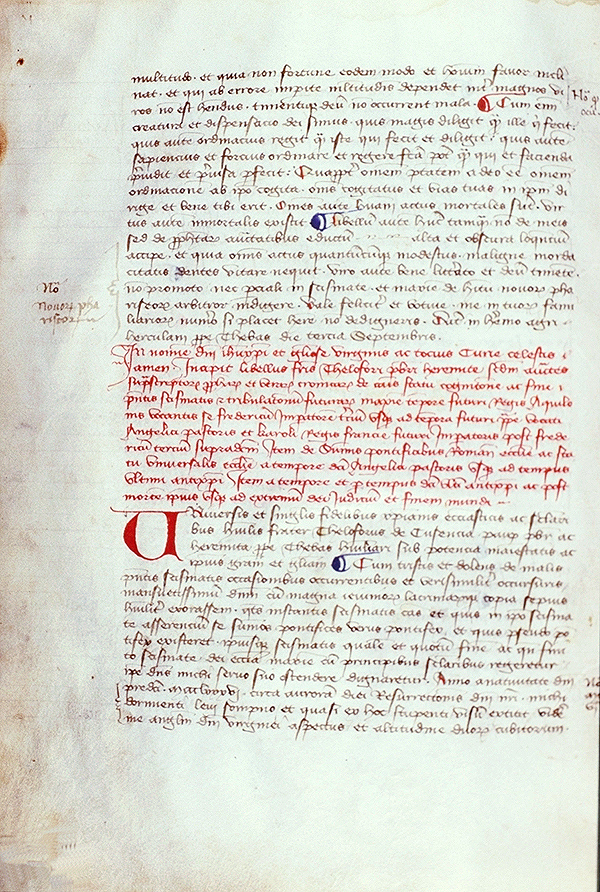
Poisonous ink likely cause of Biblical text-writing monks deaths
Monks who wrote Biblical texts and other religious materials might have died out of exposure to toxic mercury, with which the red colour ink they used for scripting was made, according to a study.
Kaare Lund Rasmussen, a University of Southern Denmark scientist at the Institute of Physics and Chemistry, believes that the ink might have been the culprit.
He came to this conclusion after studying medieval bones from six different Danish cemeteries.
The researcher says that his study also describes a previously undocumented disease called FOS, which was like leprosy and caused skull lesions.
Besides that, about 79 per cent of the interred individuals with leprosy, and 35 per cent with syphilis, had received medicines containing mercury.
Lund Rasmussen has discovered that the monks buried in the cloister walk of the Cistercian Abbey, though not having any of such diseases, had mercury in their bones.
It suggests that the monks might have been contaminated either while preparing and administering medicines or while writing the artistic letter of incunabula (pre-1500 A.D. books), says the researcher.
During the study, Lund Rasmussen and his team drilled bone samples from the buried individuals, some of which were also friars buried in the cloister walk of the Franciscan Friary in Svendborg.
The researchers found that the friars did not show any signs of mercury poisoning, unlike the monks.
The study also took into account the fact that some of the medieval individuals ate a mostly marine, fish-filled diet.
The researchers, however, say that modern seafood may contain high levels of mercury out of environmental pollution, but exposure from food would have been unlikely during the medieval period.
Lund Rasmussen says that mercury “was used (in the ink) in the first place because cinnabar (a type of mercury) has this bright red, beautiful colour.”
A separate study by Israeli scientists recently found cinnabar on four fragments of the Dead Sea Scrolls, which include passages from the Hebrew Bible.
(Even today) one should really not touch, or much less rub, the parchment pages of an incunabulum,” Discovery News quoted Lund Rasmussen as warning.
He also said that his co-author Jesper Lier Boldsen discovered the previously undocumented disease FOS while examining the skeletons.
“We do not know if FOS was fatal, but it certainly looks painful and just as severe as leprosy,” he Lund Rasmussen said.
The study will be published in the August issue of the Journal of Archaeological Science. (ANI)
From: Thaindian.com
Medieval boat found on Suffolk coast
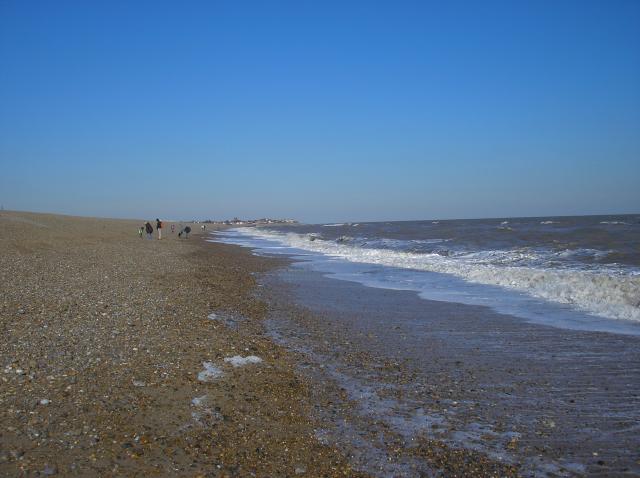
The unearthing of a medieval boat on the north Suffolk coast is of “great national importance”, the archaeological team behind the discovery said last night.
As reported in yesterday's EADT the remains were found during excavations at Sizewell in advance of the onshore works for the Greater Gabbard Wind Farm. The vessel, which was probably a small inshore fishing boat, was broken up sometime between the 12th and 14th Centuries and parts of its hull were re-used to create a timber lining for a well.
Robert Atfield, Suffolk County Council Archaeological Service's project manager, said: “The waterlogged conditions have ensured that the timbers are very well preserved.
“It is very rare to find a timber boat like this preserved to such a great extent, this is very much a significant find and of great importance nationally.
“This kind of lucky find is something which does not happen very often, we will now be looking at trying to conserve the timbers. We might try and reconstruct and display the vessel in the future.”
The other finds include a wide range of pottery, part of a wooden platter, various personal items such as buckles and clothing fasteners, fishing hooks, and weights. All of the discoveries from the dig will now be cleaned, conserved and studied in further detail.
Mr Atfield added: “Where we found the boat was probably the inland edge of the settlement that was Sizewell. It would have been very much a thriving settlement based near to the beach, but large areas of land were eroded by the sea during the 12th Century and much of the settlement lost.”
The area around the dig site would have been part of the property of Leiston Abbey, it follows the edge of a low-lying channel, which would have formed a fresh water lagoon and would have been the focus for a variety of activities. There is evidence of timber buildings, hearths and wood-lined water pits clustered at the channel's edge.
Leiston Abbey, formerly known as St Mary's Abbey, was founded in 1182 near Minsmere by Ranulf de Glanville, Lord Chief Justice to King Henry II.
In 1363 the abbey was transferred to Leiston, and its patron Robert de Ufford, Earl of Suffolk, devoted his last years to the building.Peter Simoyi, project manager for South East Electricity Substantions Alliance - one of the partners jointly funding the dig, said: “It's nice to think that in the process of connecting a new energy source for Suffolk's future, we have been able to shed light on the county's past.”
From: Eadt.co.uk
For £500,000 a fortified manor in the Yorkshire Dales
A modest up-front price gives you the chance to restore one of the finest fortified houses in England
Nappa Hall beckons you to change your life, to give up your day job and devote time and energy to restoring one of the finest fortified manor houses in England. The price makes it even more tempting: £500,000. Although one tower has not been occupied for 40 years, the other, with a gabled cottage beside it, was tenanted as recently as last month.
The setting of Nappa Hall, near Leyburn in North Yorkshire, is intoxicating. On a sunny summer day it is hard to imagine a grander view. The drive along Wensleydale takes you past mighty Bolton Castle, visible for miles around. Nappa, built in the 1450s, is Bolton's little brother, with twin towers and battlements and great hall between.
Like Bolton, it commands a breathtaking panorama along and across the dale, with stone-walled fields descending to the river and the noble outline of the fell rising on the far side. Better still, the passing road is out of sight and hearing. You enter through a carriage arch in a stable range into a courtyard open on the south. To the left is a four-storey tower with battlements, very much like the Pele towers in Northumberland, built as a protection against raiders from Scotland. The tower is built of rugged stone that can clearly endure for 1,000 years. The masonry detail is delicious, too, with medieval stone mullioned windows diminishing in size from floor to floor.
Beside the tower, the medieval great hall retains the original window tracery; the deep porch has a broad pointed archway. Beyond is a second battlemented tower, from which extends a cottage-like gabled wing with sash windows on the upper floor.
The white front door in the gabled wing is inset with diamond-shaped studs. It leads to a stone-flagged kitchen and ancient sculleries facing south, so there will always be a good view while washing up. The ceilings in this part on the house are low but on the first floor are handsomely panelled rooms, of early 18th-century date, with stone fireplaces. There is also a pretty Georgian cantilevered staircase rising in a graceful curve with stone steps projecting from the walls.
The challenge becomes apparent in the great hall, an impressive 29ft wide and 40ft long. Huge paving stones cover the floor but walls and ceilings are bare and stained with damp. The big question is whether a splendid medieval timber truss roof is waiting to be revealed above.
Ceilings and floors are rotten in the western tower, and I was not even allowed to ascend the stone spiral stair to the first floor. Yet the chance is here to create an impressively proportioned room on each level, with views growing ever more breathtaking, and this can be done while you live in the east wing. The thrill will be to work with the original, largely untouched medieval masonry.
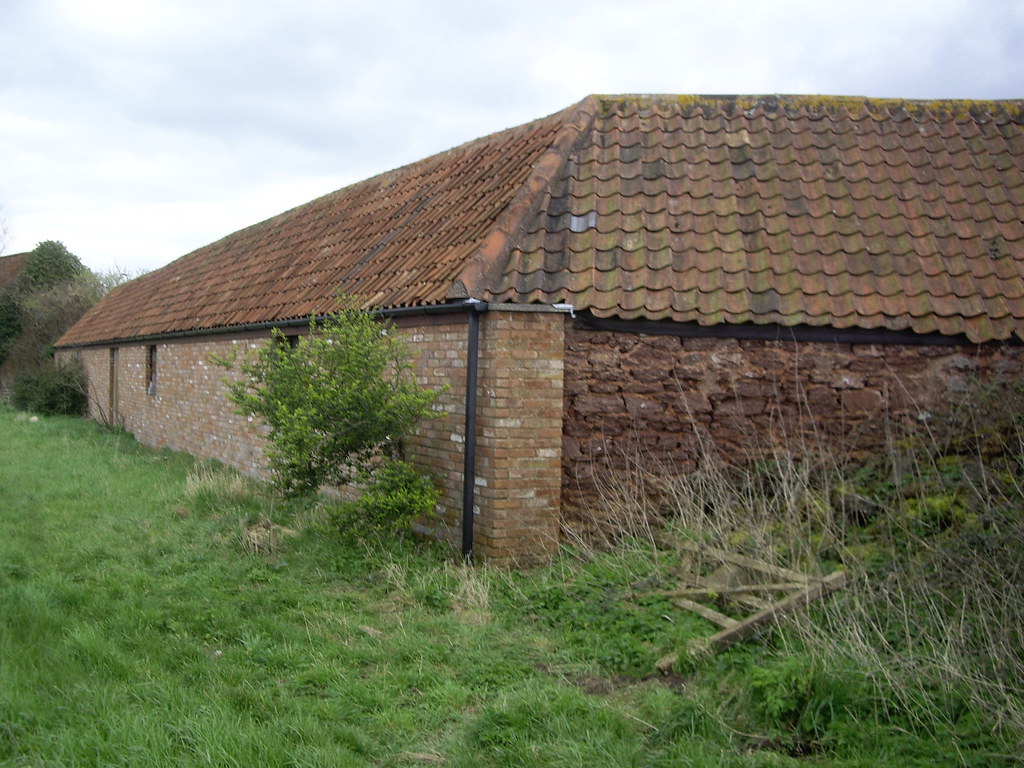
Nappa was built by James Metcalfe, who fought at Agincourt. Interestingly, it has always passed by inheritance; William Metcalfe, whose family farms the surrounding land, is now selling the house, recognising that it needs major repairs. The house comes with just five acres but a further 90 acres are available by negotiation, including a recently restored laithe barn, field barns and an extensive river frontage. Winters will be cold but the snow-clad fells will be a majestic sight.
Fast facts
What you get: Grade I listed house with great hall, six bedrooms in five acres with stone outbuildings. In all, 8,000 sq ft. Where is it: Leyburn 12m; A1 at Bedale 25m. Trains to London from Darlington and Northallerton take from 2hrs 23min.
From: Timesonline.co.uk
Military Intelligence? There's an oxymoron...
"This is not something that could be done in one, two or three years because we are talking about a country that is essentially medieval, that has very little in the way of infrastructure, very little in the way of human resource, that has an endemic culture of corruption...
"In terms of developing the country from an almost medieval status, that has to be an enterprise of decades."
- Air Chief Marshall Jock Stirrup
What can you expect from a guy named "jock?"
No wait, seriously, this guy's name is Jock Stirrup? Was he a male stripper before joining the army?
Sunday, June 22, 2008
Ledbury dig uncovers piece of history
An archaeological dig in Ledbury has uncovered a medieval wall.
An archaeological evaluation survey at the town’s Masters House has been completed as a precursor to the creation of a £2.9m library and community complex for the town.
The dig uncovered evidence of a medieval wall – a report detailing this and any other artefacts found during the survey will be produced by archaeologists within the next couple of weeks.
The archaeological survey was essential due to the historic nature of the site and its completion and the report paves the way for the design brief for the library to be finalised.
Work to dig a 20-metre trench began earlier this month. Herefordshire Council plans a new library with access for disabled people within the St Katherine’s area of the high street, together with a new information centre, a tourist information centre and visitor attraction.
From: Worcester News.co.uk
Saturday, June 21, 2008
Today in the Middle Ages
Got any rope?
"Aye. Nay. Hark. Good morrow.
"These are everyday words that a knight in shining armor would have spoken in medieval times. They also are words that seventh-grade students from Rosemont Ridge Middle School studied to prepare for the Medieval and Renaissance Faires, held recently at the school."
Well that's pretty much the most depressing thing I've read in a while. And considering the odd things I read on the internet, that means something.
Who are these teachers? According to the article, the students were 'taught' by Pam Busch and Steven Pratt. I did a quick Google(TM) search for them and came up with nothing. But who in their right minds would try to pass on such sterotypes as knowledge?
Grrr...
Such blantant ignorance makes me both angry and sad.
If the blog isn't updated for a while, assume that I hanged myself in despair.
Medieval remains found near Go Ape course site
ARCHAEOLOGISTS digging in Glasgow's Pollok Park have found medieval remains near the site of the area approved for the controversial Go Ape adventure course plans.
A team from Glasgow University and Glasgow Archeological Society made the discovery while exploring an area of woodland.
They unearthed pottery and pieces of metal they believe may date to the 11th century.
The discovery was made in a densely wooded area in the immediate vicinity of the North Wood, where the treetops adventure course would be erected.
The team also found foundations of a building they believe could be up to 400 years old.
Campaigners against the plan to create the Go Ape course say the discovery bolsters their claim the development should not be allowed to go ahead.
The dig is part of a five-year project on the area by post graduate student Mark Mitchell.
At another site archaelogists unearthed the remains of what could be the city's oldest road, dating from between 700-500BC.
Stephen Driscoll, professor of archeology at Glasgow University, said: "We have been investigating what we think is a medieval fortified site and within it a stone building, which looks to be 17th or 18th century.
"It's the predecessor of the Maxwell settlement, which gave us Pollok House. It could point to the origins of the estate."
The Go Ape plan, which was approved by Glasgow City Council, is being looked at by Scottish Government ministers.
They have until July 9 to decide whether they want to call in' the application and hold a public inquiry, which could see the council's approval decision overturned.
Bob Marshall, from Save Pollok Park, is writing to the Scottish Government to tell it of the archeological discovery and push for the plan to be halted at least until further exploration has been carried out.
He said: "We do not know what is there, and if a Go Ape course is put there it could reduce the possibility of a proper excavation - certainly for 21 years, which is the terms of the lease.
"The second thing is the possibility that in construction or use of Go Ape some of the site may well be disturbed or destroyed.
"It is a normal process to carry out a full investigation of the archeological sites before development. At the very least that should be a condition of planning."
A council spokesman said: "Archaeological matters were dealt with in the report to the Planning Applications Committee in March.
"It was noted Pollok Country Park has several potential and acknowledged archaeological sites, but it was the view of West of Scotland Archaeology Service that the Go Ape proposals did not raise any archaeological issues."
From: Evening Times.co.uk
Degree in stained glass offered
A new postgraduate course in stained glass is the only one of its kind in the English speaking world, organisers said.
The MA in stained glass conservation and heritage management at York University will combine academic study and practical training and is aimed a satisfying high international demand for conservators.
Staff at the university say the course will take advantage of York's extraordinary collections of medieval and post-medieval glass.
Course director Sarah Brown is combining her new role with being head of research policy for places of worship at English Heritage and director of the York Glaziers Trust.
She said: "We are developing the study of stained glass to meet the international demand for trained conservators specialising in the field. The course will be the first of its kind in the English-speaking world."
Ms Brown said stained glass has been a focus for academic study at the university since it was founded in the 1960s.
York is now the base for the British arm of the Corpus Vitrearum - the international stained glass recording project.
The course will be a two years long and students will have a five-month placement at conservation workshops in Britain, Europe or the USA. Potential locations for placements include the Cologne Cathedral conservation workshop and the Metropolitan Museum of Art in New York.
The course, which aims to take up to eight students a year starting in October, will be run by the university's Department of History of Art, in partnership with Archaeology.
The university also aims to offer research degree in stained glass in the future.
From: The Press Associaton
City’s oldest surviving road found by archaeology dig
The ancient pathways pounded by St Mungo as he built his church at the tiny fishing settlement called Glas Gu are positively futuristic by comparison.
After lying concealed by vegetation and woodland for what may be almost 3000 years, archaeologists have unearthed what they believe to be Glasgow's oldest surviving thoroughfare.
The heavily paved road, between 50 and 100 metres in length and leading into a stone settlement protected by large earth banks and ditches, has been discovered in a densely wooded section of the city's Pollok Park by a team made up of Glasgow University academics and members of the Glasgow Archaeological Society.
If their guesses are correct, the road dates from between 500BC and 700BC and could well be the avenue and entrance into the home of an influential Iron Age southsider.
Protected from developers over the past two centuries due to its location within Pollok Estate, the only comparison in terms of age and scale in the Glasgow area was pulverized in the early part of the decade to make way for the IKEA store within the Braehead complex.
The dig team revealed their findings after commencing their second year's excavations within Pollok Park, which they believe will eventually paint a picture of the evolution of the area from the Iron Age through to the pre-Christians and Dark Ages, the arrival of the Anglo-Norman Maxwell family and the medieval period right up to the modern era.
In the past few days work has commenced on another ancient ring works site, ironically in the immediate vicinity of the controversial Go Ape assault course proposed for the park's North Wood.
About 30 metres in diameter, the earth banks and ditches around the perimeter are still visible to the casual observer despite the trees, as is the evidence that the woodland was once ploughed agricultural land.
Pottery and pieces of metal tools unearthed in the past few days and, according to Professor of Historical Archaeology Stephen Driscoll, the layout of the fortified homestead within it suggest the Dark Ages or early medieval, around 1100AD.
But his colleague, post-graduate student Mark Mitchell, now in his second year of a five-year thesis on the area, reckons the shape of the earth banks make the settlement much older, creating a link between pre-Christian Pollok and the Maxwells, although only the discovery of some wood from the era will allow carbon dating.
Certainly medieval is the large bank and ditch, favoured by mountain bikers in the park but in recent days identified as a likely recreational hunting ground with deer enclosed and then hunted by them and their aristocratic friends, while the peasantry were kept very much on the outside.
A less expected find is what appears to be a concrete urinal and water tank system from the early 20th century, covered in undergrowth and showing up on no map of the park.
The park was once a complex estate incorporating Pollokshields, Pollokshaws and Haggs Castle and had been home to the Maxwells since around 1100, when the Anglo-Normans led by the Stuarts pushed the old Briton kings out of Strathclyde.
The original castle is now believed by the team to have stood close to where the existing Pollok House was built in 1752.
Efforts to piece together the history were helped last year when, following an article in The Herald, a retired doctor who worked on a dig at the Iron Age site in the 1950s as a 16-year-old school boy came forward and gave descriptions of a stone corn mill which puts it in the BC period.
Professor Driscoll said: "We thought everyone involved in the 1950s dig was dead but this chap came forward. The key for dating the ring works and road would be the corn stone which appears to have been lost but the description given makes it more BC than AD.
"The road into the settlement was very much telling people they were now arriving at this particular place. It was a place that was really well paved. The defences wouldn't have stopped an army but there was evidence of a lot of labour. These people had status and the ring works had room for three dwellings or one large dwelling."
Mr Mitchell added: "It's unusual to have so much of archaeological interest in the one park and the survivability is testament to how the estate has been managed in the past and present.
"Eventually the research will be published and we hope it will illuminate how this area interfaced with other estates like Glasgow and Rutherglen, as well as the relationship with religious places like Glasgow, Govan and Paisley."
From: The Herald.co.uk
Remains of medieval bishops identified
The bones of the six bishops were discovered over 40 years ago, but have only just been identified using the latest techniques for scientific analysis of remains.
Thought to have died between 1200 and 1360AD, the bishops were found during excavations at the priory between 1957 and 1967, but their identity has remained a mystery until now. Other items, such as fragments from vestments, silver altar vessels and a gold pontifical ring were also unearthed.
Archaeologists from Edinburgh-based Headland Archaeology have employed state of the art analysis to determine who the bishops were and how they died, with the examinations even revealing that they came from southern Scotland or Cumbria and what they ate.
The six remains were known to come from senior ecclesiastical figures, but radiocarbon dating has identified them has bishops John (died 1209), Walter (died 1235), Gilbert (died 1253), Henry (died 1293), Michael (died 1359) and Thomas (died 1362).
Funded by Historic Scotland, the research shows that the bishops lived on a diet of good meat and marine fish such as cod. Experts claim that the studies will create an interesting picture of the lives of clergy in Scotland during the Middle Ages.
From: UK TV History.co.uk
Saturday, May 31, 2008
Rare medieval windows helped by flower power
Rare medieval church windows in Nowton are a step closer to being restored thanks to a highly successful flower festival.
More than £1,200 was raised at the third annual St Peter's Church flower festival, which will go to restoring the windows – the third most important examples of medieval glass in the UK.
The theme of the festival, which ran from Saturday until bank holiday Monday, was The Holy Bible and a total of 21 displays, including many from professional florists, were on display.
Adrian Potter, of F Clutterham and Sons, in Bury, is also the parish organist and deputy church warden.
He organised the festival, which also included a cake stall run by parishoners.
Mr Potter said: "Everybody who came to the festival said they were very impressed by it.
"Many of our visitors go to other flower festivals but they do say ours is the best.
"The event went really well and I am grateful to everyone who was involved."
From: Buryfreepress.co.uk
Dig aims to uncover lost villages
A team of archaeologists is hoping to solve a centuries-old mystery and discover the remains of two medieval ancient towns in Carmarthenshire.
The settlements are believed to be within the grounds of Dinefwr Park and Castle near Llandeilo.
Their existence is recorded in several medieval documents and researchers are hoping to pinpoint the exact locations later this month.
Previous digs in the grounds have found the remains of a Roman fort.
Archaeologist Emma Plunkett-Dillon said: "We know that the two towns existed because they were well-recorded in various medieval documents.
What is referred to as the English town was established some time after that time, in order to colonise the area and capture the castle and surrounding area for English control.
Work will begin to try and pinpoint the exact location of these towns, beginning with the English one, on 23 June.
A team from Dyfed Archaeological Trust together with a group of volunteers will undertake a geophysical study of the land surrounding Newton House.
A machine will pass over the ground, detecting changes within the soil that will enable the archaeologists to identify buildings and other features buried beneath the grass.
Raise expectations
This will be followed by the excavation of a series of small pits which hopefully will clarify the nature of the buried archaeology.
"I don't want to raise expectations, but potentially this could be an extremely exciting investigation," added Ms Plunkett-Dillon.
"I've been working at Dinefwr myself for almost 20 years and have never seen any signs of these towns.
"This is a golden opportunity to try and find them - what we're actually doing is lifting the lid and taking a look at previously unexplored areas and I for one would dearly love to finally find something."
The public will have an opportunity to watch the archaeologists in action during an open day on 28 June.
"We know that there was a Welsh town somewhere around the castle and an English town nearer the present site of Newton House, in the centre of the estate.
"Records kept by the Crown show us that they were occupied throughout the 14th and 15th centuries - we even know how much rent people who lived there were paying at the time - but the towns themselves have completely disappeared."
The Welsh town was settled by the indigenous population sometime after 1277 when Dinefwr Castle was under Welsh control.
The settlements are believed to be within the grounds of Dinefwr Park and Castle near Llandeilo.
Their existence is recorded in several medieval documents and researchers are hoping to pinpoint the exact locations later this month.
Previous digs in the grounds have found the remains of a Roman fort.
Archaeologist Emma Plunkett-Dillon said: "We know that the two towns existed because they were well-recorded in various medieval documents.
What is referred to as the English town was established some time after that time, in order to colonise the area and capture the castle and surrounding area for English control.
Work will begin to try and pinpoint the exact location of these towns, beginning with the English one, on 23 June.
A team from Dyfed Archaeological Trust together with a group of volunteers will undertake a geophysical study of the land surrounding Newton House.
A machine will pass over the ground, detecting changes within the soil that will enable the archaeologists to identify buildings and other features buried beneath the grass.
Raise expectations
This will be followed by the excavation of a series of small pits which hopefully will clarify the nature of the buried archaeology.
"I don't want to raise expectations, but potentially this could be an extremely exciting investigation," added Ms Plunkett-Dillon.
"I've been working at Dinefwr myself for almost 20 years and have never seen any signs of these towns.
"This is a golden opportunity to try and find them - what we're actually doing is lifting the lid and taking a look at previously unexplored areas and I for one would dearly love to finally find something."
The public will have an opportunity to watch the archaeologists in action during an open day on 28 June.
"We know that there was a Welsh town somewhere around the castle and an English town nearer the present site of Newton House, in the centre of the estate.
"Records kept by the Crown show us that they were occupied throughout the 14th and 15th centuries - we even know how much rent people who lived there were paying at the time - but the towns themselves have completely disappeared."
The Welsh town was settled by the indigenous population sometime after 1277 when Dinefwr Castle was under Welsh control.
From: BBC News.co.uk
Did you know that people in the Middle Ages abused farmers for fun?
Historic dig 13 years after find
Archaeologists are digging for Roman relics in the garden of a Hertfordshire home where the owner discovered medieval pot handles 13 years ago.
Chris Hobbs found the pottery while digging a garden pond at his home in Norton, near Letchworth, in 1995.
But Mr Hobbs only realised the significance of his find when the pottery was certified as 13th Century by experts from Cambridge University.
The Norton Community Archaeological Group is now digging at the property.
Ken Bird, secretary of Norton Community Archaeological Group, said: "It was only when Chris got the pottery assessed at Cambridge University, 13 years after finding it, that he realised it dated back to the 13th Century.
There is thousands of years of unmapped history there
Ken Bird, secretary of Norton Community Archaeological Group
"We are very interested in the location as there are a lot of unanswered questions about Roman occupation, going back to 300 AD.
"There is thousands of years of unmapped history there.
"We are now trying to find if there is anything else on the site by digging cess pits. There are currently about 20 people on their hands and knees slowly scraping," Mr Bird added.
The medieval relics found in Mr Hobbs' garden are now on display in Letchworth Museum.
Chris Hobbs found the pottery while digging a garden pond at his home in Norton, near Letchworth, in 1995.
But Mr Hobbs only realised the significance of his find when the pottery was certified as 13th Century by experts from Cambridge University.
The Norton Community Archaeological Group is now digging at the property.
Ken Bird, secretary of Norton Community Archaeological Group, said: "It was only when Chris got the pottery assessed at Cambridge University, 13 years after finding it, that he realised it dated back to the 13th Century.
There is thousands of years of unmapped history there
Ken Bird, secretary of Norton Community Archaeological Group
"We are very interested in the location as there are a lot of unanswered questions about Roman occupation, going back to 300 AD.
"There is thousands of years of unmapped history there.
"We are now trying to find if there is anything else on the site by digging cess pits. There are currently about 20 people on their hands and knees slowly scraping," Mr Bird added.
The medieval relics found in Mr Hobbs' garden are now on display in Letchworth Museum.
From: BBC News.co.uk
Sunday, May 25, 2008
Saturday, May 24, 2008
Oxford lab to revisit carbon dating of Shroud of Turin
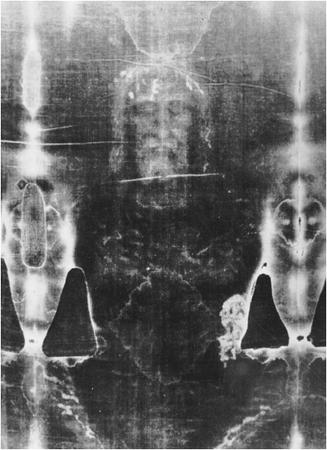
A physics professor has persuaded an Oxford laboratory to revisit the question of the age of the Shroud of Turin, the reputed burial shroud of Jesus Christ. The professor argues that carbon monoxide contaminating the shroud could have distorted its radiocarbon dating results by more than 1,000 years.
In 1988 and 1989 scientists at three laboratories drew on the results of radiocarbon dating to conclude that the shroud was a medieval forgery. They dated its creation to between 1260 and 1390 AD.
The Denver Post reports that John Jackson, a physics lecturer at the University of Colorado at Colorado Springs, has hypothesized that even minimal contamination of the shroud by environmental carbon monoxide could have skewed the dating by 1,300 years.
Professor Christopher Ramsey, head of the Oxford University Radiocarbon Accelerator Unit, has agreed to test Jackson’s hypothesis. Ramsey said that other forensic and historical evidence indicates the shroud is much older than radiocarbon dating results initially indicated.
"Science still has much to tell us about the shroud," said Jackson, a devout Catholic who heads the Colorado Springs-based Shroud of Turin Center. "If we are dealing with the burial cloth of Christ, it is the witness to the birth of Christianity. But my faith doesn't depend on that outcome," he told the Denver Post.
Jackson must prove a viable pathway for carbon monoxide contamination. He is working with Oxford to test linen samples subjected to various conditions the shroud has experienced, including outdoor exhibitions and exposure to extreme heat during a fire in 1532.
In 1978, Jackson led a research team given unprecedented access to the shroud. The team determined that the shroud was not painted, dyed or stained.
The Shroud of Turin bears faint brown discolorations that form the negative image of a man. A positive image of the shroud was produced only with the arrival of modern photography.
Forensic data indicates the bloodstains on the shroud are real and were stained on the cloth before the image of the body appeared, the Denver Post reports. Stains around the head are consistent with punctures by thorns, while the scourge marks are consistent with those made by a Roman whip. A large puncture wound on the man’s side is also consistent with that made by a Roman spear.
Though medieval iconography portrays Jesus nailed to the cross through his palms and the front of his feet, archaeologists have found the bones of a Roman crucifixion victim nailed through the wrists and heels.
There is no consensus regarding what medieval methods, if any, could have created the shroud.
Though the Vatican keeps the shroud locked in a protective chamber at the Cathedral of St. John the Baptist in Turin, Italy, the Catholic Church makes no claims about its authenticity.
From: Catholicnewsagency.com
Vandals break ancient royal church's windows
They hurled rocks and stones at 300-year-old stained glass windows and
floodlights at St Michael's parish church in Linlithgow, West Lothian.
They struck first between 5pm on Wednesday and 1pm the next day.
And police were called out again at 7.30pm on Thursday after reports more windows were being shattered.
Church bosses estimated the cost of the damage to be more than £10,000.
A police spokesman said: "St Michael's is considered as one of the finest medieval churches in Scotland.
"We are treating these incidents very seriously indeed and would appeal to the public to contact the police with any information they have about the youths responsible for this mindless vandalism."
St Michael's is one of the largest burgh churches in the Church of Scotland.
It was built on the site of an older church and consecrated in 1242 but it was destroyed by fire in 1424.
Most of the present church dates from the mid-15th century, with extensive restorations in the 19th century.
Scottish kings and queens worshipped there, as it is close to the ancient royal seat, Linlithgow Palace.
Mary, Queen of Scots was born in the palace in 1542 and and christened in St Michael's.
In June last year, vandals hurled wheelie bins and logs through stained glass windows at Fala Village Church, near Pathhead, Midlothian.
The damage was estimated at £5000.
The only window to escape intact was a 19th-century stained glass rose, which was too high for the vandals to reach.
And in 2000, a five-year-old boy and two eight-year-old friends were reported to a children's panel after a village church in Tarbert, Argyll, was vandalised.
They caused £25,000 of damage, wrecking six ornate windows and smashing pews.
From: Dailyrecord.co.uk
Saturday, May 17, 2008
Rome never fell
Regular readers of this blog will have noticed that it has an affinity for all things Roman. If you also have an affinity for the glory of ancient Rome, take a look at Pax Romana.
Pax Romana is a comic written by Jonathan Hickman . In a distant future the Catholic Church is dying. Pope Pius XIII uses experimental time-travelling technology to attempt to restore the Church to its former glory. In meddling with history Pius not only restores the power of the Catholic Church but also the power of the Roman Empire. Witness a world in which Rome still rules.
If this sounds interesting, you can read the first issue of the comic here.
Rings offer up a rare glimpse of medieval luxury
A pair of precious metal decorative rings were among a host of artefacts handed over to the National Museum of Wales.
The rings, one dating back to the 12th Century and made of gold and rose quartz, and the other made of silver and of a style typical of the 13th Century, are thought to provide a unique snapshot of the fashions once popular in Wales.
Both pieces were found last year by members of the public using metal detectors, the first unearthed in Rhoose on September 12, while the second ring was discovered on July 3 in Llanfair, Vale of Glamorgan.
Under the Treasure Act 1996, all items discovered and which are thought to date back more than 300 years or are made of more than 10% silver, must be considered before an inquest, and have the potential to be seized and handed to a museum for preservation and safekeeping.
The rings were among 10 items found by members of the public in the Cardiff and Vale of Glamorgan areas – all of which were declared “treasure” by coroner Mary Elizabeth Hassell at an inquest held in Cardiff yesterday.
Dr Mark Redknap, medievalist and a curator at the National Museum of Wales, who was at the inquest, said: “Objects from the museum’s archaeology collection, such as those which form the National Museum’s in Cardiff’s new Origins: In Search of Early Wales exhibition, tell the tale of how people used to live in Wales.
“These decorative rings are a valuable addition to this story, uncovering information about fashion, style and other aspects of life in medieval Wales.”
Other items at the inquest which were also declared treasure included a fragment from a silver gilt devotion ring thought to date back to the 15th Century, an Iron Age terret and harness ring found in Cowbridge, and five 15th-century silver groats of Henry V-VI discovered in Llantwit Major.
Most of the artefacts were found in ploughed fields or farm fields, and are thought to have been lost, rather than buried by their original owners.
The artefacts will remain at the National Museum of Wales while they are valued by the Independent Valuations Committee, which sits at the British Museum in London. A date has not been set for the valuations hearing, and depending on its outcome the museum may pursue acquisition of the objects so they can be put on display.
From: Icwales.icnetwork.co.uk
MSCU Summer Elections
The Medieval Studies Course Union will be active for the summer semester. We look forward to holding a number of activities over the summer.
But before we can start planning, we have to elect a new executive.
On Thursday May 22nd we'll be holding our first meeting of the summer. At this meeting we'll elect our new executive members and briefly outline our plans for the summer. At the moment we cannot book rooms, so we'll be meeting in front of Clearihue C 115 at 4:30 pm. If this room is not available we will move to another room and leave a message with directions on the door. The meeting will last one hour.
Ryan Hunt will be returning in his role as President of the MSCU. Stephanie Jury will also be returning to continue her role as Treasurer.
The following positions are up for election:
1. Vice-President - The Vice-President shares many of the same responsibilities as the President. These include, interacting with the Medieval Studies Program, attending relevant UVSS meetings, co-organizing events, and speaking to Medieval Studies Classes.
2. Event Chair - The Event Chair will be responsible for organizing larger scale MSCU events. In the past such events have included research collectives and undergraduate conferences.
3. Activity Chair - The Activity Chair is similar in purpose to the Event Chair. The main difference between the two roles is that the Activity Chair plans smaller scale MSCU events. Such events could include study groups, bake sales, movie nights, etc..
If you cannot attend the meeting and would like to be considered for one of these positions, please send a reply or contact Ryan personally. Send a write-up of why you'd like to be considered for the positions and your write-up will be read at the meeting.
Thursday, May 15, 2008
Medieval jewellery found in Bridgwater
A rare piece of early medieval jewellery uncovered in a Bridgwater field is now waiting to be valued at the British Museum.
The silver pinhead was discovered in September 2006 by Timothy Phillips, who was running a metal detector over a ploughed field in Chilton Trinity.
It was taken to Somerset County Museum, where experts revealed the two cm object to be a post-Roman silver pinhead, or hand pin, made between 450 and 500AD.
At an inquest held in Taunton last week, Naomi Payne from the museum said the pin would have been worn by a woman of substantial wealth and possibly used to keep a cloak fastened.
Originally, the piece would have been attached to a 12cm pin, much like a hatpin.
According to the museum, there have been no findings of this kind of decorative jewellery since new treasure laws were introduced in 1997, and so the value is currently unknown.
advertisement
The item has been passed on to the British Museum awaiting a valuation, which should take place in the next few months.
advertisement
The item has been passed on to the British Museum awaiting a valuation, which should take place in the next few months.
The silver pinhead will be on display when the Somerset County Museum re-opens in 2010.
From: Bridgwatermercury.co.uk
Mysterious Monks, Fruit Fetish and Helpless Horses - oh my!

It's that time again - time to round up some questionable uses of the word 'Medieval.'
Say what you will about how the word is used, it sure gets around. Below you will find 'Medieval' referenced in the contexts of brutality, religion and ignorance - what a surprise. Once again the news media manages to provide much stereotype as less substance. The small-mindedness of the news media is almost medie... never mind.
Subscribe to:
Posts (Atom)